
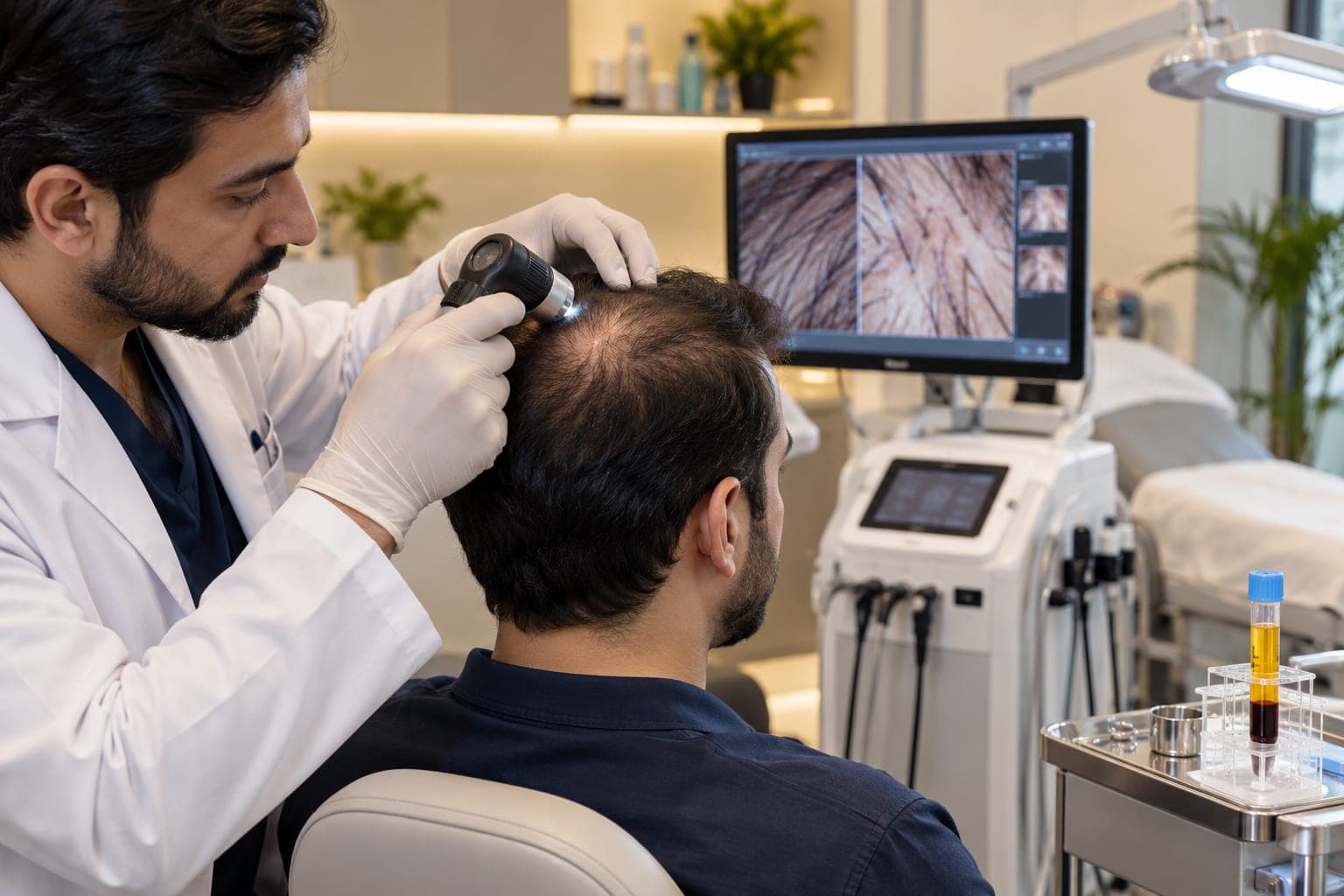
Hair Loss Treatment in Lahore explained: common causes of hair loss, available treatments, PRP, exosomes, hair transplant, and when to see a specialist.
Hair Loss Treatment in Lahore: Causes, Treatments & What Actually Works
Hair loss is a common concern for both men and women and can range from mild hair thinning to significant loss of scalp hair. While some shedding is normal, persistent hair fall, a widening part, a receding hairline, or reduced hair density may indicate an underlying cause that needs proper assessment.
Hair Loss Treatment in Lahore depends on the type and cause of hair loss. Treatment options may include medical management, lifestyle and nutritional assessment, PRP therapy, exosome-based treatments, or hair transplantation in suitable patients.
There is no single treatment that works for every type of hair loss. Factors such as genetics, hormones, nutritional deficiencies, stress, medical conditions, medications, age, and the condition of the scalp can all influence hair growth and shedding.
In this guide, we will explain the common causes of hair loss, different types of hair loss, how hair loss is evaluated, available treatment options, PRP and exosome therapy, when a hair transplant may be considered, expected treatment timelines, and factors that can affect the hair loss treatment cost in Lahore.
Understanding the cause of hair loss is the first step toward choosing an appropriate treatment plan and setting realistic expectations.
What Causes Hair Loss?
Hair loss can happen for many different reasons, and identifying the underlying cause is important before choosing a treatment. While hereditary hair loss is one of the most common causes, hair shedding can also be linked to stress, hormonal changes, nutritional deficiencies, medical conditions, scalp disorders, or certain medications.
Some common causes of hair loss include:
- Genetic or hereditary hair loss: Androgenetic alopecia is a common cause of progressive hair thinning in both men and women.
- Hormonal changes: Changes involving thyroid hormones, androgens, or other hormones may contribute to increased hair shedding or thinning.
- Stress and illness: Significant physical or emotional stress, fever, surgery, or illness can trigger temporary increased hair shedding.
- Nutritional deficiencies: Low levels of nutrients such as iron, vitamin D, vitamin B12, zinc, or inadequate protein intake may contribute to hair shedding in some individuals.
- Scalp conditions: Conditions affecting the scalp, including inflammation or certain infections, may interfere with normal hair growth.
- Medications: Some medicines can cause temporary or persistent hair shedding as a side effect.
- Age-related changes: Hair growth and density can naturally change with age.
- Hair and scalp practices: Repeated chemical treatments, excessive heat, tight hairstyles, or mechanical damage can contribute to hair breakage and reduced hair quality.
Why Identifying the Cause Matters
Different types of hair loss require different approaches. For example, treatment for hereditary hair loss may differ from treatment for temporary shedding caused by illness, stress, or a nutritional deficiency.
A proper assessment may include a detailed history, scalp examination, and, when appropriate, laboratory tests to look for contributing factors. Treating the underlying cause can be an important part of an effective hair loss management plan.
If hair loss is sudden, severe, patchy, associated with scalp symptoms, or continuing despite basic measures, professional evaluation is recommended before starting a treatment.
Different Types of Hair Loss
Hair loss does not look the same in every person. Identifying the pattern and progression of hair loss can help determine the possible cause and guide the choice of treatment.
Androgenetic Alopecia
Androgenetic alopecia, also known as pattern hair loss, is one of the most common forms of hair loss. In men, it often appears as a receding hairline, thinning at the crown, or gradual reduction in overall scalp density. In women, it commonly presents as diffuse thinning, particularly around the central part of the scalp.
Telogen Effluvium
Telogen effluvium is a type of temporary increased hair shedding that can occur after significant physical or emotional stress, illness, surgery, rapid weight loss, nutritional problems, or hormonal changes. Hair shedding may become noticeable several weeks or months after the triggering event.
Alopecia Areata
Alopecia areata is an autoimmune condition that can cause sudden, well-defined patches of hair loss. It may affect the scalp, beard, eyebrows, or other hair-bearing areas. Medical assessment is important because its management differs from common pattern hair loss.
Traction Alopecia
Traction alopecia can develop when hair is repeatedly pulled or placed under tension. Tight hairstyles, extensions, braids, or other practices that create prolonged tension may contribute to hair loss.
Hair Loss Due to Scalp Conditions
Inflammation, infections, dermatitis, and other scalp disorders can sometimes contribute to hair shedding or hair loss. Treating the underlying scalp condition may be an important part of management.
Why the Type of Hair Loss Matters
The same treatment is not appropriate for every type of hair loss. Some conditions may improve after the underlying trigger is addressed, while hereditary hair loss may require longer-term management.
A professional evaluation can help distinguish between different patterns of hair loss and determine whether medical treatment, PRP, exosome therapy, hair transplantation, or another approach may be appropriate.
How Is Hair Loss Diagnosed?
Finding the cause of hair loss is an important step before selecting a treatment. A proper assessment helps determine whether the hair loss is related to genetics, temporary shedding, nutritional factors, hormonal changes, scalp conditions, or another underlying problem.
Medical and Hair Loss History
The assessment usually begins with questions about when the hair loss started, how quickly it is progressing, family history of hair loss, recent illness or stress, diet, medications, hormonal changes, and previous hair treatments.
Scalp and Hair Examination
The scalp and hair are examined to assess the pattern of thinning, hair density, scalp condition, and the presence of inflammation, scaling, redness, or other abnormalities.
The pattern of hair loss can provide useful clues. For example, a receding hairline and crown thinning may suggest pattern hair loss, while sudden patchy areas may require assessment for other conditions.
Laboratory Tests When Appropriate
Blood tests are not necessary for every patient, but they may be recommended when the medical history or examination suggests a possible underlying cause.
Depending on the individual case, a clinician may consider tests related to:
- Iron status and ferritin.
- Vitamin D.
- Vitamin B12.
- Thyroid function.
- Complete blood count.
- Other hormonal or nutritional factors when clinically indicated.
Why Diagnosis Comes Before Treatment
Hair loss treatments should be selected according to the underlying cause rather than simply treating the symptom of hair shedding. A patient with temporary telogen effluvium may require a different approach from someone with progressive androgenetic alopecia.
Once the likely cause and pattern of hair loss have been identified, an individualized treatment plan can be discussed, including medical treatment, PRP, exosome therapy, or hair transplantation when appropriate.
Hair Loss Treatment Options in Lahore
The most appropriate hair loss treatment depends on the underlying cause, pattern of hair loss, scalp condition, age, overall health, and the amount of existing hair density. There is no single treatment that is suitable for everyone.
Common approaches used in hair loss management may include:
Medical Treatment
Depending on the diagnosis, certain prescription or topical treatments may help slow hair loss or support hair growth. These treatments should be selected according to the patient's medical history and suitability rather than used without professional guidance.
PRP Hair Treatment
Platelet-rich plasma (PRP) therapy uses a patient's own blood components to prepare a concentrated platelet solution that is injected into selected areas of the scalp. PRP may be considered for certain types of hair thinning and is often used as part of a broader hair-loss management plan.
Exosome Hair Treatment
Exosome-based hair treatments are an emerging approach being investigated for hair and scalp regeneration. Some clinics offer exosome therapy for selected patients with hair thinning, although evidence and treatment protocols can vary. Patients should discuss the source, preparation, regulatory status, and available evidence before treatment.
Hair Transplantation
A hair transplant may be considered when there is stable donor hair and sufficient loss that cannot be adequately managed with non-surgical treatments. Techniques such as FUE and DHI involve transferring hair follicles from a donor area to areas affected by hair loss.
Treatment of Underlying Causes
If hair loss is associated with factors such as nutritional deficiency, thyroid problems, scalp inflammation, hormonal changes, or another medical condition, addressing the underlying cause may be an important part of treatment.
Why an Individualized Plan Matters
The best approach may involve one treatment or a combination of treatments. For example, a patient with early pattern hair loss may be managed differently from a patient with advanced hair loss requiring transplantation.
A consultation and proper assessment can help determine which hair loss treatment in Lahore is appropriate for the individual's condition, goals, and long-term hair-loss pattern.
PRP for Hair Loss
Platelet-rich plasma (PRP) is a non-surgical treatment that may be considered for certain types of hair thinning and hair loss. The procedure uses a sample of the patient's own blood, which is processed to prepare a platelet-rich component that is then injected into selected areas of the scalp.
PRP is generally considered as part of a broader hair-loss management plan rather than a guaranteed solution for every type of hair loss.
How Does PRP Work for Hair Loss?
Platelets contain a range of growth-related proteins and signaling molecules. When prepared and administered appropriately, PRP may support the local scalp environment and may help improve hair density or reduce shedding in some patients.
The response can vary depending on the cause and severity of hair loss, the patient's overall health, and the PRP preparation and treatment protocol used.
Who May Benefit From PRP?
PRP may be considered for patients with certain forms of early or moderate hair thinning, particularly when viable hair follicles are still present in the affected areas.
It may be less suitable as a standalone treatment when an area has advanced, long-standing hair loss with significant follicular loss.
How Many PRP Sessions Are Needed?
The number of sessions depends on the patient's condition and treatment plan. Multiple sessions may be recommended, usually spaced apart to allow the scalp to respond between treatments.
The need for maintenance sessions may also vary from person to person.
PRP Before or After Hair Transplant
PRP may sometimes be incorporated into a hair restoration plan before or after hair transplantation. However, its role should be determined according to the individual patient's condition rather than used routinely in every case.
A consultation can help determine whether PRP is appropriate and whether it should be combined with other treatments for hair loss.
Exosome Hair Treatment
Exosome hair treatment is an emerging approach being explored for hair thinning and hair loss. Exosomes are small extracellular vesicles involved in cell-to-cell communication and may contain signaling molecules that can influence cellular activity.
Some clinics offer exosome-based treatments as a non-surgical option for selected patients with hair thinning. However, the scientific evidence is still developing, and treatment products, preparation methods, and regulatory status can vary significantly.
How Does Exosome Hair Treatment Work?
Exosome-based products are applied or injected into selected areas of the scalp according to the treatment protocol being used. The proposed mechanism involves signaling between cells and the delivery of biological molecules that may influence the local tissue environment.
The exact clinical response can vary between patients, and exosome treatment should not be presented as a guaranteed method of hair regrowth.
Who May Be Considered for Exosome Treatment?
Exosome therapy may be discussed for selected patients with early or moderate hair thinning when viable hair follicles are still present. A scalp assessment is important before treatment to determine whether the patient is an appropriate candidate.
Patients should also be informed that exosome therapy is different from established treatments such as medications, PRP, and hair transplantation, and the level of clinical evidence is not the same for all treatment approaches.
What Should Patients Ask Before Treatment?
Before undergoing exosome hair treatment, patients should ask about:
- The source and preparation of the exosome product.
- How the product is stored and handled.
- The treatment protocol being used.
- Available scientific evidence for the specific product.
- Possible risks and side effects.
- Whether the treatment is appropriate for their particular type of hair loss.
A professional consultation can help determine whether exosome hair treatment in Lahore is appropriate or whether another hair-loss treatment may be more suitable.
When Is a Hair Transplant Needed?
A hair transplant may be considered when hair loss has progressed to a level where non-surgical treatments alone are unlikely to provide sufficient coverage. It is a surgical hair restoration procedure that involves moving healthy hair follicles from a donor area to areas affected by hair loss.
A hair transplant is not necessary for every person experiencing hair fall. The decision should be based on the cause and pattern of hair loss, donor hair availability, age, progression of hair loss, and the patient's expectations.
Who May Be a Suitable Candidate?
A hair transplant may be considered when a patient has:
- A stable or reasonably predictable pattern of hair loss.
- Adequate healthy donor hair on the scalp.
- Areas of thinning or baldness that can potentially be improved through transplantation.
- Realistic expectations regarding density and long-term results.
- No untreated scalp condition that could interfere with the procedure.
FUE and DHI Hair Transplant
FUE (Follicular Unit Extraction) involves extracting individual follicular units from the donor area and implanting them into the recipient area.
DHI (Direct Hair Implantation) is a method in which extracted follicles are implanted using an implantation device. The appropriate technique depends on the patient's hair characteristics, donor area, recipient area, and the surgeon's treatment plan.
Can a Hair Transplant Stop Future Hair Loss?
A hair transplant moves existing follicles; it does not necessarily stop the progression of non-transplanted hair. Patients with ongoing pattern hair loss may therefore require medical or other maintenance treatments to help preserve their existing hair.
Why Proper Assessment Is Important
Before recommending a hair transplant, the donor area, recipient area, hair density, scalp condition, and pattern of hair loss should be assessed carefully.
For some patients, medical treatment, PRP, exosome therapy, or another non-surgical approach may be more appropriate. For others, transplantation may provide a suitable option for restoring hair in areas where significant density has been lost.
Hair Loss Treatment for Men
Hair loss in men is commonly associated with androgenetic alopecia, also known as male pattern hair loss. It often begins with a receding hairline, thinning around the temples, or reduced density at the crown and may gradually progress over time.
However, not every case of male hair loss is caused by genetics. Stress, nutritional deficiencies, scalp conditions, hormonal factors, medications, and other medical conditions can also contribute to hair shedding.
Common Treatment Options for Men
The appropriate treatment depends on the cause and stage of hair loss. Depending on the individual case, treatment may include:
- Medical treatment: Certain topical or prescription medications may help slow the progression of pattern hair loss or support existing hair.
- PRP therapy: PRP may be considered for selected patients with thinning hair and can be used as part of a non-surgical hair-loss management plan.
- Exosome hair treatment: Exosome-based treatments are an emerging option that some clinics offer for selected cases of hair thinning. Evidence and treatment protocols are still developing.
- Hair transplant: Patients with significant permanent hair loss and an adequate donor area may be evaluated for FUE, DHI, or another suitable hair restoration approach.
- Treatment of underlying causes: If hair loss is related to nutritional, hormonal, scalp, or medical factors, addressing the underlying problem may be an important part of treatment.
Early Assessment Can Be Helpful
Early evaluation can be particularly useful in male pattern hair loss because treatment may be more effective when there is still a reasonable amount of existing hair density.
A consultation can help determine the pattern and severity of hair loss, assess the donor area, and identify whether medical treatment, PRP, exosome therapy, hair transplantation, or a combination approach may be appropriate.
Hair Loss Treatment for Women
Hair loss in women can have many different causes, and the pattern may differ from the typical receding hairline seen in men. Women may experience diffuse thinning across the scalp, a widening central part, increased hair shedding, or localized areas of reduced density.
Common contributing factors can include genetic hair loss, hormonal changes, pregnancy or postpartum changes, nutritional deficiencies, thyroid problems, stress, illness, certain medications, and scalp conditions.
Common Treatment Options for Women
Treatment should be based on the underlying cause and may include:
- Medical treatment: Depending on the diagnosis, a clinician may recommend appropriate topical or prescription treatment.
- Nutritional management: If a deficiency such as low iron or vitamin D is identified, correcting the deficiency may be an important part of hair-loss management.
- PRP therapy: PRP may be considered for selected women with certain forms of hair thinning and may be used as part of a broader treatment plan.
- Exosome hair treatment: Exosome-based treatments are an emerging option for hair thinning, although clinical evidence and treatment protocols continue to develop.
- Hair transplantation: In carefully selected women with suitable donor hair and localized or stable areas of hair loss, hair transplantation may be considered.
Hair Loss After Pregnancy
Some women experience increased hair shedding several months after pregnancy. This can occur as part of a temporary shedding process and may improve over time.
However, persistent or severe hair loss should not automatically be attributed to postpartum changes. Nutritional status, thyroid function, hormonal factors, and other possible causes may need to be assessed.
Why Women Need Individualized Assessment
Diffuse hair thinning in women can have several overlapping causes. Treating the visible hair loss without identifying the underlying factor may not address the main problem.
A professional assessment can help determine the likely cause and whether medical treatment, nutritional management, PRP, exosome therapy, hair transplantation, or another approach is appropriate.
How Long Does Hair Loss Treatment Take?
The timeline for hair loss treatment depends on the underlying cause, severity of hair loss, treatment method, and individual response. Hair growth is naturally a slow process, so most treatments require time before meaningful changes in hair density or shedding can be assessed.
Medical Treatment
For patients using medical treatment for pattern hair loss, improvement is generally assessed over several months rather than a few weeks. Continued treatment may be necessary to maintain the benefits, depending on the medication and the underlying condition.
PRP Hair Treatment
PRP treatment usually involves a series of sessions rather than a single treatment. The interval between sessions depends on the patient's condition and the treatment protocol.
Changes in hair shedding and density may take several months to become noticeable, and individual responses can vary.
Exosome Hair Treatment
The response to exosome-based treatment can also vary considerably. Because exosome hair therapy is an emerging treatment, there is no universally established timeline that applies to every patient.
Patients should be given realistic expectations rather than being promised a specific amount of hair growth within a fixed period.
Hair Transplant Results
Hair transplantation has a different timeline because the transplanted follicles need time to establish a new growth cycle. Temporary shedding of transplanted hair can occur during the early recovery period, followed by gradual new growth.
Visible improvement develops progressively over the following months, with the final appearance taking longer to assess.
Why Patience Matters
Hair-loss treatment is usually a long-term process rather than an instant solution. Results depend on factors such as the cause of hair loss, treatment consistency, age, overall health, existing follicle condition, and individual response.
A consultation can help establish a realistic treatment timeline based on the patient's specific type and stage of hair loss.
Hair Loss Treatment Cost in Lahore
The hair loss treatment cost in Lahore can vary significantly depending on the cause of hair loss, the treatment selected, the number of sessions required, and the extent of hair thinning.
There is no single price that applies to every patient because hair loss treatments are individualized according to the patient's condition and treatment goals.
Factors That Affect Treatment Cost
The cost may depend on factors such as:
- The type and severity of hair loss.
- The treatment method being used.
- The number of PRP or other treatment sessions required.
- The amount of scalp area being treated.
- Whether laboratory tests or additional assessment are required.
- Whether a combination of treatments is recommended.
- For hair transplantation, the number of grafts required and the technique used.
PRP Hair Treatment Cost
PRP treatment is generally priced according to the treatment protocol and number of sessions recommended. Some patients may require a series of sessions, while maintenance treatment may be considered depending on the individual's response.
Exosome Hair Treatment Cost
The cost of exosome hair treatment can vary depending on the product used, treatment protocol, and number of sessions. Patients should ask about the source and preparation of the exosome product and what is included in the quoted price before proceeding.
Hair Transplant Cost
Hair transplant pricing is usually influenced by the number of grafts required, the surgical technique, the condition of the donor area, and what is included in the treatment package.
A consultation is the best way to determine the most appropriate treatment and provide an individualized cost estimate.
Choose Treatment Based on Your Diagnosis
The lowest-priced treatment is not necessarily the most appropriate treatment for a particular type of hair loss. A proper assessment can help identify the cause of hair loss and avoid spending money on treatments that may not address the underlying problem.
At Skinnex Clinic, patients can discuss their hair-loss concerns during a consultation and receive a treatment plan based on their individual condition and goals.
How to Choose a Hair Loss Clinic in Lahore
Choosing the right clinic is an important part of hair-loss treatment. Different causes of hair loss require different approaches, so patients should look beyond promotional offers and focus on proper assessment, qualified professionals, treatment transparency, and appropriate follow-up.
What Should You Look For?
When choosing a hair loss clinic in Lahore, consider:
- Qualified healthcare professionals: Make sure your assessment and treatment are performed or supervised by appropriately qualified professionals.
- Proper diagnosis: A clinic should evaluate the pattern and possible causes of hair loss before recommending a treatment.
- Individualized treatment plans: Treatment should be selected according to your specific condition rather than using the same procedure for every patient.
- Transparent information: The clinic should clearly explain the expected benefits, limitations, possible risks, and number of sessions involved.
- Appropriate technology: Equipment and treatment protocols should be suitable for the procedure being performed.
- Realistic expectations: Be cautious of claims promising guaranteed hair growth, permanent results for every patient, or unusually fast outcomes.
- Follow-up care: Good hair-loss management includes appropriate follow-up so that progress can be assessed and the treatment plan adjusted when necessary.
- Clear pricing: Ask what is included in the treatment cost and whether additional sessions, medicines, tests, or follow-up treatments may involve separate charges.
Why Consultation Matters
A consultation allows the clinician to examine the scalp, assess the pattern and severity of hair loss, review relevant medical history, and discuss suitable treatment options.
Depending on the diagnosis, treatment may involve medical management, PRP, exosome therapy, hair transplantation, or a combination of approaches.
The goal should not simply be to find a hair loss clinic in Lahore offering the lowest price, but to choose a clinic that provides appropriate assessment, evidence-informed treatment, patient safety, and realistic expectations.
Frequently Asked Questions About Hair Loss Treatment in Lahore
What is the best treatment for hair loss?
There is no single treatment that is best for every patient. The appropriate option depends on the cause, pattern, severity, and duration of hair loss. Treatment may include medical management, PRP, exosome therapy, or hair transplantation in suitable cases.
Can hair loss be completely reversed?
Some types of hair loss can improve significantly when the underlying cause is identified and treated early. However, established permanent hair loss may not be fully reversible with non-surgical treatments. A professional assessment can help determine what level of improvement may be realistic.
Is PRP effective for hair loss?
PRP may help some patients with certain types of hair thinning, particularly when viable hair follicles are still present. Results vary between individuals, and PRP should not be considered a guaranteed treatment for every type of hair loss.
Is exosome treatment good for hair loss?
Exosome hair treatment is an emerging approach for hair thinning. Early research is promising in some areas, but clinical evidence and treatment protocols are still developing. Patients should discuss the product source, evidence, potential risks, and regulatory considerations before treatment.
When should I consider a hair transplant?
A hair transplant may be considered when there is permanent hair loss, sufficient donor hair, and realistic expectations regarding the achievable coverage. The decision should be made after assessing the donor area, recipient area, and progression of hair loss.
How long does hair loss treatment take to show results?
The timeline varies by treatment and individual response. Medical treatments, PRP, and other non-surgical approaches generally require several months to assess properly, while hair transplant results develop progressively over a longer period.
What is the cost of hair loss treatment in Lahore?
The cost depends on the treatment selected, number of sessions, severity of hair loss, and whether additional tests or treatments are required. Hair transplantation is usually priced according to factors such as graft requirements and technique.
Should I see a doctor for hair loss?
Professional assessment is recommended when hair loss is sudden, severe, patchy, rapidly progressing, or associated with scalp symptoms. An assessment can help identify the underlying cause and determine the most appropriate treatment.
Why Choose Skinnex Clinic for Hair Loss Treatment in Lahore?
Choosing the right clinic for hair-loss treatment involves more than selecting a procedure. At Skinnex Clinic, the focus is on assessing the patient's hair-loss pattern, understanding possible contributing factors, and selecting a treatment approach based on the individual's condition and goals.
Individualized Hair Loss Assessment
Every patient can have a different cause and pattern of hair loss. A consultation allows the scalp, hair density, donor area, and progression of hair loss to be assessed before recommending treatment.
Multiple Treatment Options
Depending on the patient's diagnosis and suitability, treatment options may include medical hair-loss management, PRP therapy, exosome-based treatments, or hair transplantation.
Focus on Realistic Expectations
Hair restoration is a gradual process, and results can vary between individuals. Treatment options, expected timelines, limitations, and possible risks should be discussed before starting a procedure.
Professional Hair Restoration Environment
Skinnex Clinic provides consultation and hair restoration services for patients experiencing hair thinning and hair loss in Lahore. Treatment plans are developed according to the patient's individual needs rather than applying the same approach to every case.
If you are experiencing persistent hair loss or thinning, a professional assessment can help determine the underlying cause and identify the most appropriate treatment options.
Book a Consultation for Hair Loss Treatment in Lahore
If you are experiencing persistent hair fall, thinning hair, a receding hairline, or reduced scalp density, a professional assessment can help identify the possible cause and determine which treatment options may be suitable for you.
At Skinnex Clinic, patients can discuss their hair-loss concerns and receive an individualized assessment based on their hair-loss pattern, scalp condition, donor area, medical history, and treatment goals.
Depending on the diagnosis, suitable options may include medical hair-loss management, PRP therapy, exosome hair treatment, or hair transplantation.
What to Expect During Your Consultation
During the consultation, you can discuss:
- When your hair loss started and how it has progressed.
- Your family history of hair loss.
- Previous treatments and their results.
- Your scalp and hair condition.
- Possible contributing factors.
- Suitable treatment options.
- Expected treatment timeline and realistic results.
- Estimated treatment cost based on your individual needs.
If you are looking for Hair Loss Treatment in Lahore, contact Skinnex Clinic to schedule a consultation and discuss the most appropriate approach for your hair-loss concerns.
This article is general information, not medical advice. Suitability, outcomes and recovery vary between individuals and can only be confirmed after an in-person assessment.
All articles