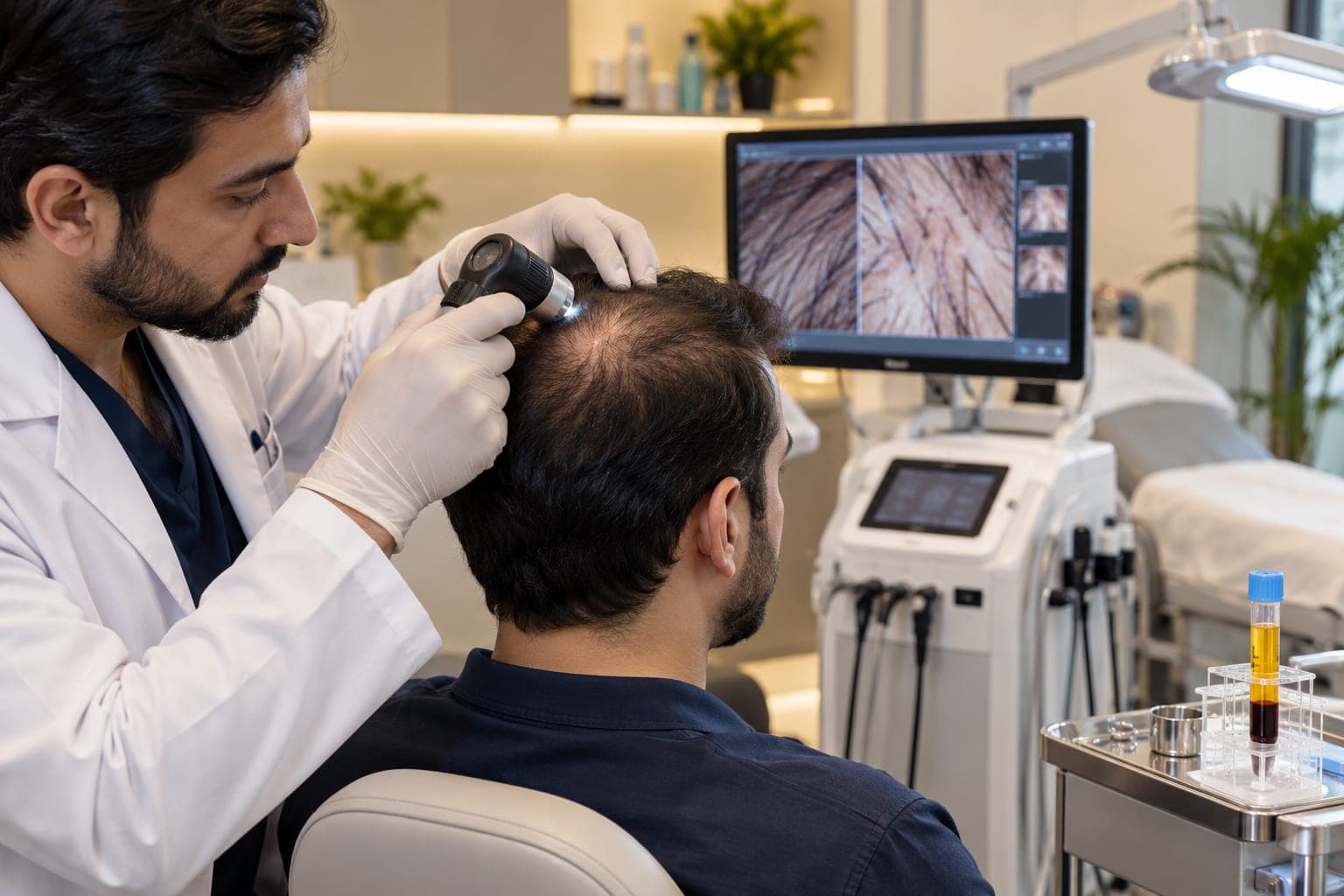

Is a hair transplant permanent? Learn how long transplanted hair can last, why transplanted hair is generally resistant to hair loss, and what affects long-term hair transplant results.
Hair transplantation is often considered a long-term solution for hair loss, but many patients have an important question before undergoing the procedure: is a hair transplant permanent?
The answer is more nuanced than simply saying yes or no. Transplanted hair can provide long-lasting results because follicles are generally taken from areas of the scalp that are more resistant to androgenetic hair loss. However, the long-term outcome depends on factors such as donor-hair characteristics, the cause and progression of hair loss, treatment planning, and ongoing management of the patient’s existing hair.
In this guide, we explain how long transplanted hair can last, why transplanted hair is generally more resistant to hair loss, what can happen after 5 or 10 years, and how you can protect your hair transplant results for the long term.
Is a Hair Transplant Permanent?
A hair transplant is generally considered a long-term hair-restoration solution. The transplanted follicles are usually taken from the donor area at the back or sides of the scalp, where hair follicles are typically more resistant to the effects of androgenetic hair loss.
Once successfully transplanted and established, these follicles can continue producing hair for many years.
However, it is important to understand that a hair transplant does not stop the natural progression of hair loss in every area of the scalp. Your transplanted hair and your original, non-transplanted hair can behave differently over time.
This is why proper planning and long-term hair-loss management are important when considering a hair transplant.
Why Does Transplanted Hair Last So Long?
The main reason transplanted hair can last for many years is the characteristics of the donor follicles.
In most cases, hair follicles are harvested from the back and sides of the scalp. These areas are often referred to as the donor zone and are generally less sensitive to the hormonal effects that contribute to androgenetic hair loss.
When healthy follicles from the donor area are carefully transplanted into areas affected by hair loss, they can retain many of their original characteristics and continue producing hair after they have fully established.
This is commonly known as the concept of donor dominance.
However, this does not mean that every transplanted hair is guaranteed to remain unchanged forever. The quality of the donor area, the patient's individual pattern of hair loss, the surgical technique, graft handling, and overall hair-loss management can all influence long-term results.
For this reason, a properly planned hair transplant focuses not only on restoring hair today but also on creating a natural-looking result that can remain balanced as the patient ages.
How Long Does a Hair Transplant Last?
A successful hair transplant can provide results that last for many years, and transplanted follicles are generally considered long-lasting. In suitable patients, the transplanted hair may continue growing for decades because the follicles are usually selected from a donor area that is more resistant to androgenetic hair loss.
However, there is no exact number of years that applies to every patient. Hair characteristics, age, genetics, the extent of ongoing hair loss, donor-area quality, and the quality of the transplant procedure can all affect long-term results.
It is also important to distinguish between transplanted hair and your natural hair. The transplanted follicles may remain stable while non-transplanted hair around them continues to thin. This can gradually change the overall appearance of the hairline or density.
For this reason, a hair transplant should be viewed as a long-term restoration procedure rather than a guarantee that all hair loss will stop permanently. Careful planning and appropriate hair-loss management can help maintain a natural-looking result over time.
What Happens to a Hair Transplant After 5 or 10 Years?
Five or ten years after a hair transplant, the transplanted follicles can continue to produce hair, provided they have successfully established and remain healthy. Many patients can maintain a natural-looking improvement for a long period after the procedure.
However, the appearance of the hair may change with age. The most important factor is often what happens to the patient's original, non-transplanted hair.
If natural hair around the transplanted area continues to thin, the difference between transplanted and native hair can become more noticeable. This may affect overall density and could eventually create a need for additional treatment in some patients.
The transplanted hair itself does not normally start falling out simply because five or ten years have passed. Instead, gradual changes are more commonly related to natural aging, progressive hair loss in non-transplanted areas, changes in hair thickness, or other individual factors.
This is why long-term planning is important before a hair transplant. A good treatment plan should consider the patient's current hair loss, future progression, donor-hair availability, and the possibility of maintaining the existing native hair.
Can Transplanted Hair Fall Out Again?
Yes, transplanted hair can shed or become thinner in some situations, but this does not necessarily mean that the hair transplant has failed.
It is normal for newly transplanted hair to shed during the early recovery period. This is often called shock loss or shedding, and new growth can begin after the follicles enter a new growth cycle.
Once transplanted follicles have successfully established, they are generally more resistant to androgenetic hair loss than the patient's original hair. However, individual results can vary, and transplanted hair may become thinner or weaker over time due to factors such as aging, changes in hair characteristics, medical conditions, or other causes of hair loss.
It is also possible for natural, non-transplanted hair to continue falling out. This can sometimes make it appear as though the transplanted hair is being lost when the actual change is occurring in the surrounding native hair.
Therefore, a hair transplant should not be viewed as a guarantee that every transplanted hair will remain unchanged forever. Proper diagnosis, realistic expectations, careful surgical planning, and appropriate long-term hair-loss management are important for maintaining the best possible result.
This article is general information, not medical advice. Suitability, outcomes and recovery vary between individuals and can only be confirmed after an in-person assessment.
All articles