FUE Hair Transplant in Lahore
FUE Hair Transplant in Lahore is a modern hair restoration procedure that uses Follicular Unit Extraction to restore areas affected by hair thinning, receding hairlines, or baldness. Individual follicular units are carefully extracted from the donor area and implanted into areas where hair density has been reduced.
FUE is a commonly used hair transplant technique because it allows individual grafts to be harvested and placed according to the patient's hairline, density, and restoration goals.
The suitability of FUE depends on factors such as the pattern of hair loss, donor hair availability, scalp condition, age, and long-term expectations. A proper assessment is important before deciding how many grafts are required and which areas can be restored.
At Skinnex Clinic, each hair transplant plan is designed according to the patient's individual hair-loss pattern and donor area, with the aim of achieving natural-looking and proportionate hair restoration.
How Does FUE Hair Transplant Work?
FUE hair transplant works by removing individual follicular units from a suitable donor area and carefully implanting them into areas affected by hair loss. The procedure is designed to preserve the natural direction, angle, and distribution of the patient's existing hair.
Donor Area
The donor area, usually located at the back and sides of the scalp, is assessed for hair density and follicle quality. Healthy follicular units are selected for extraction while planning the donor area carefully to avoid unnecessary over-harvesting.
Follicular Unit Extraction
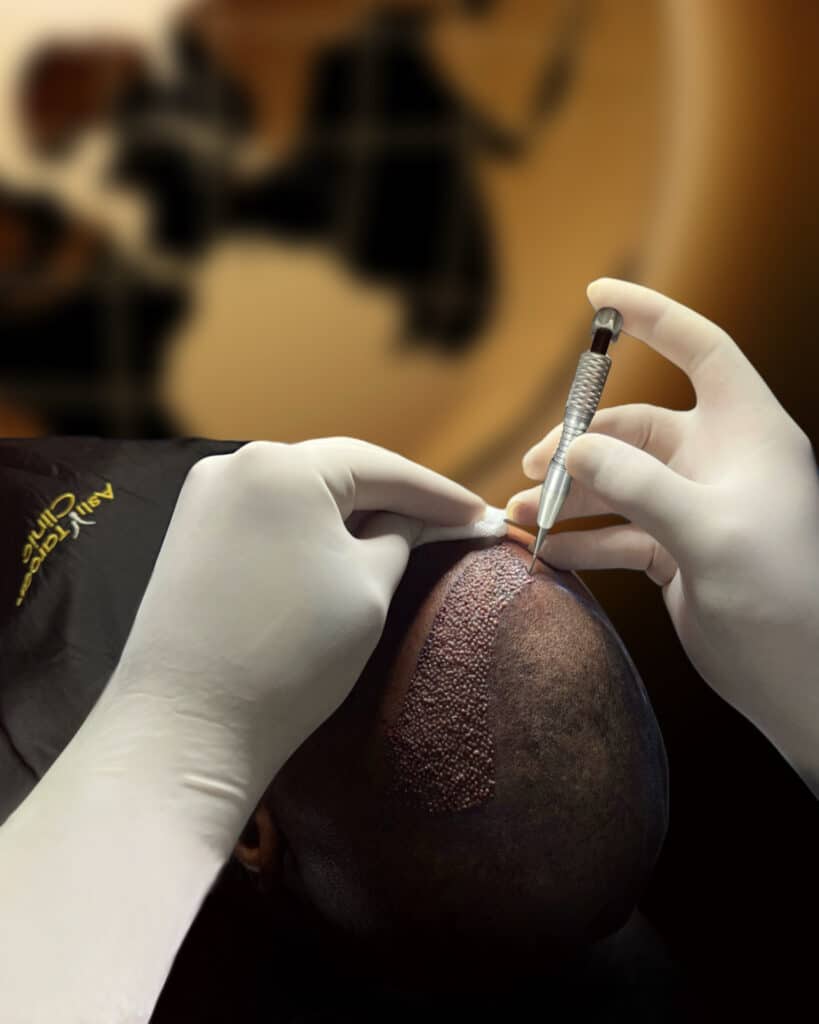
During FUE, individual follicular units are extracted using a small specialized punch. Each graft may contain one or more naturally occurring hair follicles.
The extracted grafts are handled carefully and kept in appropriate conditions before implantation.
Graft Placement
The recipient area is prepared according to the planned hairline and desired coverage. The extracted grafts are then placed into the recipient sites while considering the natural direction and angle of hair growth.
Natural-Looking Hair Restoration
The final appearance depends on several factors, including the quality of the donor hair, number of available grafts, recipient area, hair characteristics, and the overall treatment plan.
Because every patient's hair-loss pattern is different, the number of grafts and final achievable density should be determined after an individual assessment.
Who Is a Good Candidate for FUE Hair Transplant?
FUE hair transplant may be suitable for men and women experiencing certain types of permanent hair loss, provided they have sufficient healthy donor hair and realistic expectations about the achievable results.
A proper consultation is important before treatment because not every patient with hair loss is a suitable candidate for hair transplantation.
You may be considered for FUE if you have:
- A receding hairline or areas of permanent hair loss.
- Thinning or baldness around the crown or other areas of the scalp.
- Adequate donor hair at the back or sides of the scalp.
- Healthy hair follicles that can be safely extracted and transplanted.
- A stable or reasonably predictable pattern of hair loss.
- Realistic expectations regarding hair density and long-term results.
When FUE May Not Be the Right Option
A hair transplant may need to be delayed or reconsidered if hair loss is rapidly progressing, the donor area has insufficient density, or an active scalp condition has not been properly managed.
Patients with temporary hair shedding caused by factors such as illness, nutritional deficiencies, stress, or hormonal changes may benefit from addressing the underlying cause before considering transplantation.
The final suitability for FUE Hair Transplant in Lahore should be determined after assessing the patient's hair-loss pattern, donor area, scalp condition, medical history, and long-term restoration goals.
FUE Hair Transplant Procedure
An FUE hair transplant is performed through a series of carefully planned steps. The exact procedure can vary depending on the patient's hair-loss pattern, donor area, number of grafts, and treatment goals.
1. Hair and Scalp Assessment
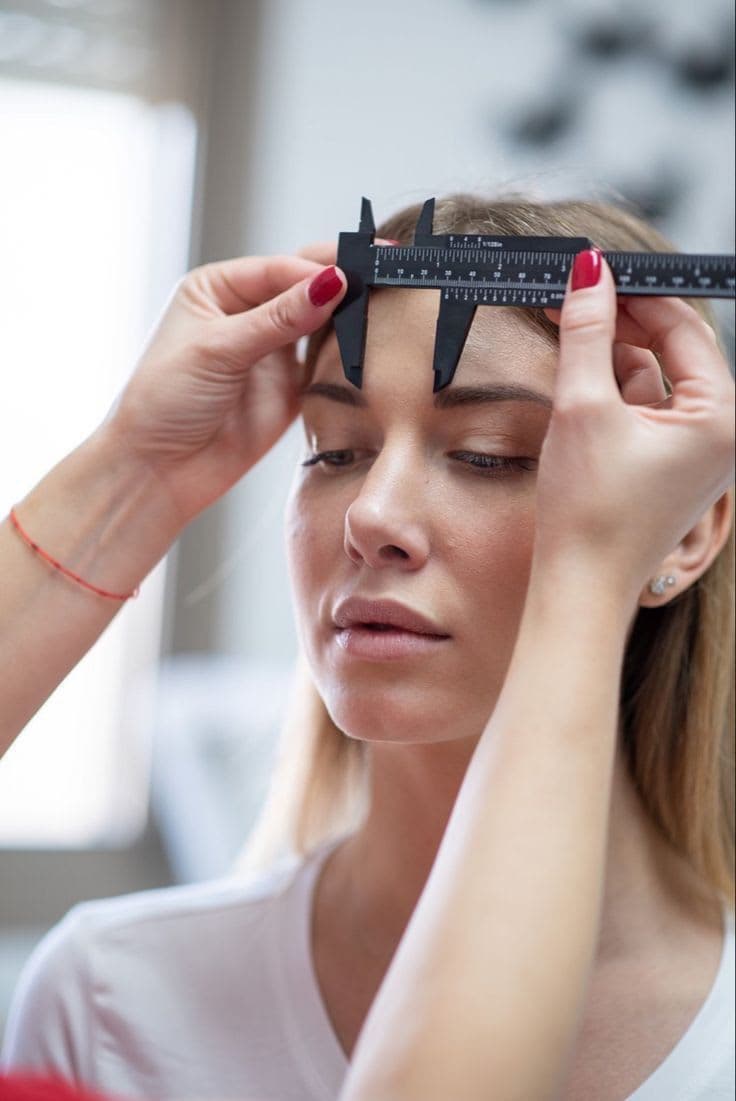
Before the procedure, the hairline, scalp, donor area, hair density, and pattern of hair loss are assessed. The number of grafts required and the areas to be restored are then planned according to the patient's individual needs.
2. Hairline Design
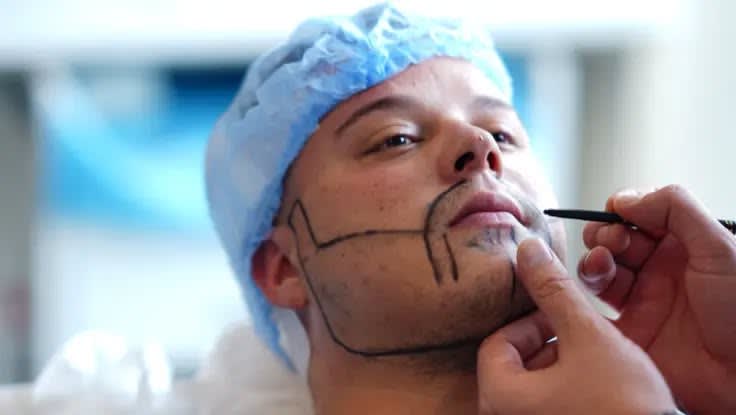
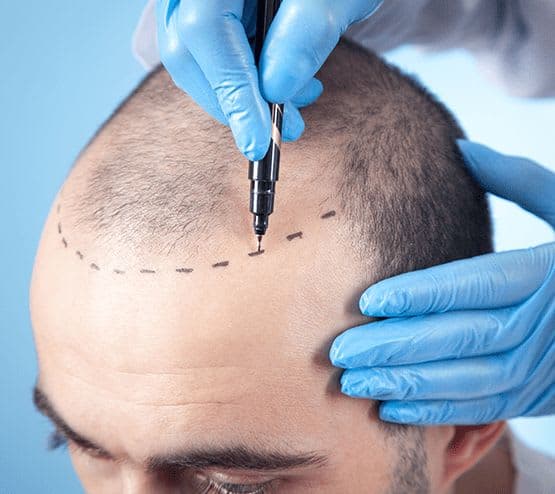
The recipient area is marked and the hairline is designed according to the patient's facial proportions, existing hair pattern, age, and available donor supply. The aim is to create a natural-looking hairline rather than an excessively dense or artificial appearance.
3. Local Anesthesia
Local anesthesia is administered to the donor and recipient areas to minimize discomfort during the procedure. The patient remains awake while the procedure is performed.
4. Follicular Unit Extraction
Individual follicular units are carefully extracted from the donor area using a specialized punch. The grafts are handled carefully to minimize damage and maintain their viability.
5. Recipient Site Preparation
Small recipient sites are created in the areas requiring restoration. Their direction, angle, and distribution are planned according to the patient's existing hair to help achieve a natural appearance.
6. Graft Implantation
The extracted follicular units are carefully placed into the prepared recipient sites. Grafts containing different numbers of hairs may be distributed strategically according to the area being treated.
7. Post-Procedure Instructions
After the procedure, the patient receives instructions regarding scalp care, washing, sleeping position, medications when required, physical activity, and follow-up.
The procedure duration depends on the number of grafts being transplanted and the individual treatment plan. A consultation is important to determine the appropriate graft number and treatment approach for each patient.
How Many Grafts Are Needed for an FUE Hair Transplant?
The number of grafts required for an FUE hair transplant depends on the extent and pattern of hair loss, the size of the treatment area, existing hair density, donor hair availability, and the patient's restoration goals.
A graft is a naturally occurring follicular unit that may contain one or more hair follicles. The number of hairs produced by each graft can therefore vary from patient to patient.
Factors That Affect Graft Requirements
The required number of grafts may depend on:
- The size of the bald or thinning area.
- The degree of hairline recession.
- Crown or mid-scalp thinning.
- Existing hair density in the recipient area.
- The quality and density of the donor area.
- Hair thickness and texture.
- The patient's desired level of coverage.
- The availability of suitable donor follicles.
Hairline Restoration
A receding hairline may require fewer grafts than extensive scalp baldness. Grafts are usually distributed carefully around the frontal area to create a natural transition from the forehead to the existing hair.
Crown and Larger Areas
The crown and larger areas of scalp thinning may require a greater number of grafts depending on their size and the amount of existing hair. In some patients, available donor hair may need to be prioritized between different areas.
Can More Grafts Always Give Better Results?
Not necessarily. The donor area contains a finite supply of transplantable hair, so careful graft planning is important. Over-harvesting the donor area can reduce its density and may affect future hair restoration options.
For this reason, the appropriate graft number should be determined after examining the donor and recipient areas rather than selecting a fixed number for every patient.
During a consultation, the clinician can assess the patient's hair loss and donor supply and provide an individualized estimate of the grafts that may be required.
FUE Hair Transplant Recovery
Recovery after an FUE hair transplant is generally gradual. The scalp needs time to heal after graft extraction and implantation, while the transplanted follicles go through their natural growth cycle.
First Few Days
Mild redness, swelling, tenderness, or small scabs may appear in the donor and recipient areas. These effects can vary depending on the number of grafts transplanted and the individual's healing response.
Patients are usually given specific instructions regarding scalp washing, sleeping position, physical activity, and medication after the procedure.
First Few Weeks
The small crusts or scabs around the transplanted grafts gradually heal and shed. It is important to avoid scratching or unnecessarily disturbing the recipient area during the early healing period.
Some transplanted hairs may shed during the early weeks. This can be part of the normal hair growth cycle and does not necessarily mean that the transplanted follicles have been lost.
Following Months
After the initial recovery period, the transplanted follicles gradually enter their new growth cycle. New hair growth develops progressively rather than appearing immediately after the procedure.
The appearance of the scalp can continue to change for several months as the transplanted hair becomes longer and thicker.
FUE Aftercare
Following the clinic's aftercare instructions is important for supporting proper healing. Patients may be advised to:
- Follow the recommended scalp-washing instructions.
- Avoid scratching or picking the treated areas.
- Protect the scalp from excessive sun exposure.
- Avoid strenuous activities for the period recommended by the treating professional.
- Take prescribed or recommended medications as directed.
- Attend scheduled follow-up appointments.
Recovery time varies from person to person. The treating clinician can provide more specific aftercare instructions based on the number of grafts transplanted and the individual patient's healing response.
When Do FUE Hair Transplant Results Appear?
FUE hair transplant results develop gradually because transplanted follicles need time to establish their natural growth cycle. The final appearance does not occur immediately after the procedure.
Early Stage
During the first few weeks, the transplanted area may show redness, small crusts, and temporary shedding. Some of the transplanted hair shafts may fall out during this stage while the follicles remain in the scalp.
Around 3 to 4 Months
New hair growth may begin to become noticeable in some patients. Initially, the new hairs can appear fine or thin before gradually becoming stronger and more visible.
Around 6 Months
Many patients begin to see more noticeable improvement in hair coverage and density. However, the rate of growth can vary considerably between individuals.
Around 9 to 12 Months
The transplanted hair generally continues to mature, becoming longer, thicker, and more natural in appearance. The overall result can continue to develop beyond this period depending on the individual growth cycle.
What Affects the Final Result?
The outcome of an FUE hair transplant can depend on several factors, including:
- Quality and density of the donor hair.
- Number and quality of transplanted grafts.
- Patient's natural hair characteristics.
- Hair-loss pattern and progression.
- Surgical technique and graft handling.
- Individual healing and hair-growth cycle.
- Long-term management of non-transplanted hair.
Results vary from patient to patient, so a specific amount of growth or density should not be guaranteed. A consultation can help establish realistic expectations based on the patient's donor area, hair-loss pattern, and restoration goals.
FUE Hair Transplant Before and After
Before-and-after photographs can help patients understand how hair density and coverage may change following an FUE hair transplant. However, results can vary significantly between individuals and should not be interpreted as a guarantee of a specific outcome.
The appearance of the result can be influenced by factors such as the number of grafts transplanted, donor hair quality, hair thickness, recipient area, existing hair density, and the natural growth cycle of the transplanted follicles.
What Can FUE Hair Transplant Improve?
Depending on the individual case, FUE may help improve the appearance of:
- Receding hairlines.
- Frontal hairline density.
- Temple areas.
- Crown or vertex thinning.
- Localized areas of hair loss.
- Overall scalp coverage where sufficient donor hair is available.
How Should Before and After Photos Be Compared?
For a meaningful comparison, photographs should ideally be taken under similar:
- Lighting conditions.
- Camera angles.
- Hair length and styling.
- Distance from the camera.
- Background and image quality.
It is also important to consider the time between photographs because transplanted hair develops gradually over several months.
Before-and-after images represent individual treatment outcomes and should not be considered a promise of identical results for every patient. During a consultation, the donor area and pattern of hair loss can be assessed to discuss realistic expectations for FUE Hair Transplant in Lahore.
FUE Hair Transplant Cost in Lahore
The FUE Hair Transplant Cost in Lahore can vary from patient to patient because the treatment is planned according to the individual's hair-loss pattern, donor area, number of grafts, and restoration goals.
There is no single price that applies to every FUE hair transplant. A proper assessment is needed before providing an accurate treatment estimate.
Factors That Affect FUE Hair Transplant Cost
The total cost may depend on:
- Number of grafts required: Larger areas of hair loss may require more grafts.
- Donor hair availability: The quality and density of the donor area can affect treatment planning.
- Extent of hair loss: A small receding hairline may require fewer grafts than extensive scalp thinning.
- Treatment technique: The specific extraction and implantation approach used can influence the overall cost.
- Clinic and medical team: Experience, facility standards, equipment, and professional supervision may also affect pricing.
- Additional services: Medicines, laboratory tests, aftercare products, or follow-up treatments may be included or charged separately depending on the treatment package.
Why Graft Assessment Is Important
The number of grafts should not be selected simply because a larger number sounds better. A careful treatment plan should balance the patient's restoration goals with the available donor supply.
Over-harvesting the donor area can reduce its density and may limit future hair restoration options. For this reason, graft planning should be based on an individual assessment rather than a fixed number for every patient.
Get an Individualized FUE Estimate
At Skinnex Clinic, the estimated FUE hair transplant price in Lahore can be discussed after assessing the patient's hair-loss pattern, donor area, graft requirements, and treatment goals.
A consultation allows the treatment plan and expected costs to be explained before the procedure.
Is FUE Hair Transplant Safe?
FUE hair transplantation is a commonly performed surgical hair restoration procedure when it is carried out using appropriate techniques, sterile conditions, and proper patient selection. However, like any surgical procedure, FUE is not completely free of risks.
Before treatment, the patient's scalp, donor area, medical history, medications, and overall suitability should be assessed. This helps identify factors that may affect healing or the final outcome.
What Can Patients Expect?
After FUE, temporary effects may include:
- Mild redness or swelling.
- Small scabs around the transplanted grafts.
- Temporary tenderness or sensitivity.
- Mild discomfort in the donor or recipient area.
- Temporary numbness or altered sensation in some areas.
- Temporary shedding of transplanted hairs during the early growth cycle.
These effects generally improve as the scalp heals, although recovery varies between patients.
How Can Risks Be Reduced?
Appropriate patient selection, careful graft extraction, proper handling of follicular units, sterile technique, and suitable recipient-site planning can help reduce avoidable complications.
Patients should also provide complete information about their medical history, medications, allergies, previous procedures, and any scalp conditions before treatment.
Following post-operative instructions and attending recommended follow-up appointments are also important for proper recovery.
Although FUE can provide effective hair restoration for suitable patients, individual results cannot be guaranteed. A consultation with a qualified hair-restoration professional is important before deciding whether FUE is appropriate for you.
Possible Side Effects and Risks of FUE Hair Transplant
FUE hair transplantation is generally well tolerated when performed with appropriate surgical techniques and proper patient selection. However, patients should understand that temporary side effects and potential complications can occur.
Common Temporary Effects
Some patients may experience:
- Mild redness or swelling of the scalp.
- Small scabs around the extracted and transplanted grafts.
- Tenderness or mild discomfort.
- Temporary numbness or sensitivity.
- Itching during the healing process.
- Temporary shedding of transplanted hairs.
These effects usually improve as the scalp heals, although the recovery period can vary between individuals.
Possible Complications
Less common complications may include:
- Infection.
- Excessive bleeding or bruising.
- Prolonged swelling or inflammation.
- Changes in skin pigmentation.
- Folliculitis or inflammation around hair follicles.
- Poor graft growth or survival.
- Unnatural hair direction or appearance.
- Over-harvesting of the donor area.
- Visible scarring, although significant scarring is uncommon with properly performed FUE.
Donor Area Management
Careful donor-area planning is particularly important. Removing too many grafts from a limited donor supply can result in reduced donor density and may affect the appearance of the back or sides of the scalp.
For this reason, the number of grafts should be planned according to the available donor hair rather than simply maximizing the number of extracted grafts.
When to Contact the Clinic
Patients should contact their treating healthcare professional if they develop significant pain, increasing redness or swelling, pus or other signs of infection, persistent bleeding, fever, or any other unusual symptoms after the procedure.
Following the recommended aftercare instructions and attending scheduled follow-up appointments can help support safe recovery.
Why Choose Skinnex Clinic for FUE Hair Transplant in Lahore?
Choosing the right clinic is an important part of achieving a natural-looking hair restoration result. FUE hair transplantation requires careful planning of the hairline, donor area, graft extraction, and placement.
At Skinnex Clinic, FUE hair transplant treatment is planned according to each patient's individual hair-loss pattern, donor hair availability, and restoration goals.
Individual Hair Transplant Planning
Before the procedure, the scalp and donor area are assessed to determine the appropriate treatment approach and estimated number of grafts. The hairline and recipient areas are planned with attention to natural proportions and existing hair density.
Focus on Donor Area Preservation
The donor area contains a limited supply of hair follicles. Careful extraction and graft planning are therefore important to..
Suitability, session counts and recovery vary between individuals. Details are confirmed during your in-person assessment.