Eyebrow Hair Transplant in Lahore
Eyebrow Hair Transplant in Lahore is a hair restoration procedure designed for people with sparse, thin, uneven, or partially missing eyebrows. The procedure involves transferring individual hair follicles from a suitable donor area to the eyebrow region, where they are carefully placed according to the desired shape, direction, and density.
Unlike temporary cosmetic methods such as eyebrow pencils, powders, or microblading, an eyebrow hair transplant uses the patient's own hair follicles to restore eyebrow hair.
The final appearance depends on factors such as the quality of the donor hair, the number of available grafts, eyebrow design, follicle placement, and the patient's natural healing and hair growth.
At Skinnex Clinic, each eyebrow transplant is planned according to the patient's facial features, existing eyebrow pattern, donor hair availability, and desired aesthetic outcome.
About Dr Muhammad Khalid Baloch
Dr Muhammad Khalid Baloch is associated with Skinnex Clinic in Lahore and focuses on hair restoration and aesthetic treatments. His areas of practice include FUE hair transplantation, DHI hair transplantation, beard hair transplantation, eyebrow hair transplantation, PRP-based hair treatments, and other hair-loss management options.
For every patient, Dr Muhammad Khalid Baloch evaluates the pattern of hair loss or eyebrow thinning, donor hair availability, facial proportions, existing hair characteristics, and individual treatment goals before developing a personalized treatment plan.
His approach focuses on careful graft planning, natural-looking hair direction and placement, appropriate donor-area management, and setting realistic expectations about the treatment process and results.
What Is an Eyebrow Hair Transplant?
An eyebrow hair transplant is a surgical hair restoration procedure in which individual hair follicles are taken from a suitable donor area and transplanted into areas of the eyebrows that have become sparse, thin, or completely hairless.
The transplanted follicles are placed individually to follow the natural direction and angle of eyebrow growth. Because eyebrows have a different growth pattern from scalp hair, careful placement and appropriate graft selection are important for achieving a natural-looking appearance.
Eyebrow hair transplantation may be considered for people with naturally sparse eyebrows as well as those who have experienced eyebrow hair loss due to over-plucking, trauma, scarring, certain medical conditions, or other causes.
A consultation is important to determine whether eyebrow transplantation is suitable and to establish an appropriate eyebrow shape, density, and treatment plan.
Who Is a Good Candidate for Eyebrow Hair Transplant?
Eyebrow hair transplant may be suitable for people who have sparse, thin, uneven, or partially missing eyebrow hair and want a longer-term restoration option using their own hair follicles.
You may be considered for eyebrow hair transplantation if you have:
- Naturally thin or sparse eyebrows.
- Eyebrow hair loss caused by repeated over-plucking.
- Uneven eyebrow density or gaps.
- Eyebrow hair loss following an injury or trauma.
- Hair loss in an eyebrow area affected by a scar, depending on the condition of the scar tissue.
- Reduced eyebrow density due to certain non-scarring causes of hair loss.
- Adequate donor hair available for transplantation.
A consultation is necessary before treatment because not every type of eyebrow hair loss is suitable for transplantation. The underlying cause of hair loss, skin condition, donor hair quality, and the condition of the recipient area should be evaluated before deciding on the procedure.
The number of grafts required also varies from person to person depending on the existing eyebrow density, desired shape, and amount of hair loss.
Eyebrow Hair Transplant Procedure
An eyebrow hair transplant involves several carefully planned steps, from designing the eyebrow shape to extracting and placing individual hair follicles.
1. Consultation and Eyebrow Design
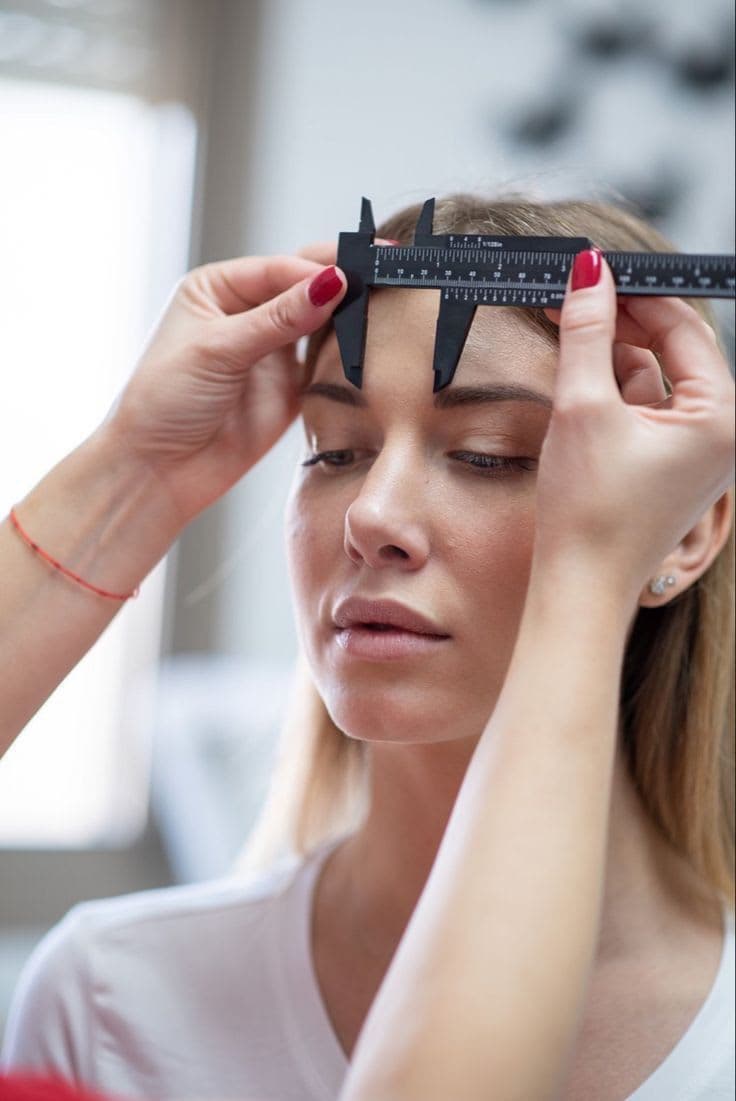
The first step is to assess the existing eyebrow hair, facial proportions, donor area, and the patient's desired appearance. The eyebrow shape and treatment area are then planned according to the individual's facial features and existing hair pattern.
2. Donor Hair Selection
Hair follicles are selected from a suitable donor area, usually from the scalp. The donor hair should have characteristics that are appropriate for eyebrow restoration.
3. Follicular Graft Extraction
Individual follicular units are carefully extracted from the donor area using an appropriate hair-transplant technique. The number of grafts depends on the size of the treatment area and the desired eyebrow density.
4. Graft Preparation
The extracted follicles are prepared for implantation while maintaining their integrity. Careful handling of the grafts is important throughout the procedure.
5. Precise Graft Placement
The prepared grafts are individually placed into the eyebrow area according to the planned shape, angle, direction, and density. Particular attention is given to the natural direction of eyebrow hair growth.
6. Post-Procedure Instructions
After the procedure, patients receive instructions regarding eyebrow and scalp care, washing, physical activity, and other aspects of recovery. Follow-up may be recommended to assess healing and hair growth.
The exact technique, number of grafts, and treatment plan vary between patients and are determined during the consultation.
How Many Grafts Are Needed for an Eyebrow Hair Transplant?
The number of grafts required for an eyebrow hair transplant varies from person to person. Unlike scalp hair transplantation, eyebrow restoration requires a relatively small number of carefully selected grafts because the treatment focuses on creating natural-looking shape and density rather than maximum hair volume.
The required graft count may depend on:
- The current density of the eyebrows.
- The size of the areas with hair loss.
- The desired eyebrow shape and thickness.
- Whether one or both eyebrows require treatment.
- The availability and characteristics of donor hair.
- Previous eyebrow procedures or scarring.
During the consultation, the treatment area is assessed and an estimated number of grafts is determined according to the patient's individual requirements.
Using an appropriate number of grafts is important because excessive density may not look natural, while insufficient graft placement may not provide the desired coverage.
The goal is to achieve balanced eyebrow density while maintaining the natural direction, angle, and appearance of eyebrow hair.
Eyebrow Hair Transplant Recovery
Recovery after an eyebrow hair transplant is generally gradual. The treated area may appear slightly red or swollen immediately after the procedure, and small crusts can develop around the transplanted follicles during the early healing period.
First Few Days
Patients may experience mild redness, swelling, tenderness, or sensitivity around the eyebrows and donor area. Small scabs may form as the transplanted follicles begin to heal.
It is important to avoid rubbing, scratching, or unnecessarily touching the transplanted area during this stage.
First Few Weeks
The transplanted hairs may shed during the early weeks after transplantation. This is a normal part of the hair-growth cycle and does not necessarily mean that the transplanted follicles have been lost.
The skin gradually returns to its normal appearance as healing progresses.
Long-Term Growth
New hair growth from the transplanted follicles develops gradually. Because eyebrow hair has its own growth cycle, the final appearance should be assessed over time rather than immediately after the procedure.
Patients should follow the aftercare instructions provided by their treating healthcare professional and attend recommended follow-up appointments.
Recovery and hair-growth timelines can vary depending on the individual, the number of grafts transplanted, healing response, and other factors.
When Do Eyebrow Hair Transplant Results Appear?
Eyebrow hair transplant results develop gradually rather than immediately. The transplanted follicles need time to heal and enter their normal growth cycle.
During the first few weeks, the transplanted hairs may shed. This is commonly known as shock shedding and does not necessarily indicate failure of the transplanted follicles.
New hair growth may become noticeable over the following months, with gradual improvement in eyebrow density and appearance.
The overall timeline can vary between individuals. Factors such as healing response, graft characteristics, donor hair quality, and the natural hair-growth cycle can influence how quickly visible results develop.
Typical Eyebrow Transplant Timeline
- First few days: Mild redness, swelling, and small crusts may occur.
- First few weeks: Transplanted hairs may shed as the follicles adjust to their new location.
- Around 3–4 months: Early new growth may become noticeable in some patients.
- 6–9 months: Eyebrow density and coverage may continue to improve.
- Around 12 months: The overall result can be assessed more reliably.
The final outcome varies from patient to patient, and individual results cannot be guaranteed. Regular follow-up helps monitor the growth and development of the transplanted eyebrows.
Eyebrow Hair Transplant Before and After: What Results Can You Expect?
Eyebrow hair transplant results develop gradually as the transplanted follicles heal and begin producing new hair. Before-and-after photographs can help patients understand the type of improvement that may be possible, but individual results can vary.
Potential improvements may include:
- Increased eyebrow density in sparse areas.
- Filling of visible gaps within the eyebrows.
- Improvement in uneven eyebrow appearance.
- Restoration of areas affected by previous hair loss or trauma.
- A more defined eyebrow shape based on the patient's facial features.
The final appearance depends on factors such as the number and quality of transplanted grafts, donor hair characteristics, eyebrow design, graft placement, healing response, and natural hair growth.
Because transplanted scalp hairs may continue to grow differently from natural eyebrow hairs, some patients may need to trim or maintain the transplanted hairs regularly to preserve the desired eyebrow appearance.
Before-and-after photographs should be evaluated carefully, as lighting, camera angle, hair length, and the time between photographs can affect how results appear. A consultation provides a more accurate assessment of what may be achievable for each individual patient.
Eyebrow Hair Transplant Cost in Lahore
The cost of an eyebrow hair transplant in Lahore can vary depending on the individual treatment plan and the amount of restoration required. Unlike scalp hair transplantation, eyebrow procedures usually involve a smaller number of carefully selected grafts.
Several factors can influence the overall cost, including:
- Number of grafts required.
- Whether one or both eyebrows are being treated.
- Extent of eyebrow hair loss.
- Complexity of eyebrow design and graft placement.
- Donor hair availability and quality.
- Technique used for follicular graft extraction and implantation.
- Individual treatment and aftercare requirements.
Because every patient's eyebrow pattern and restoration needs are different, a fixed price may not accurately represent the treatment required.
At Skinnex Clinic, the estimated treatment plan and cost are discussed after evaluating the eyebrows, donor area, desired shape, and number of grafts required during consultation.
If you are considering an eyebrow hair transplant in Lahore, a consultation can help you understand the expected graft requirement, procedure, recovery, and estimated treatment cost.
Suitability, session counts and recovery vary between individuals. Details are confirmed during your in-person assessment.